In my last post I try to teach 11 common similes in English. However, as some students still feel that they need more practise, I have decided to produce this post too. This post contains a visually appealing demonstration of all the 11 similes, a short film to learn the phrases and a dictation exercise.
You can see all the similes in one picture. Go through them and try to remember the phrases.
ADVERT
[showmyads]
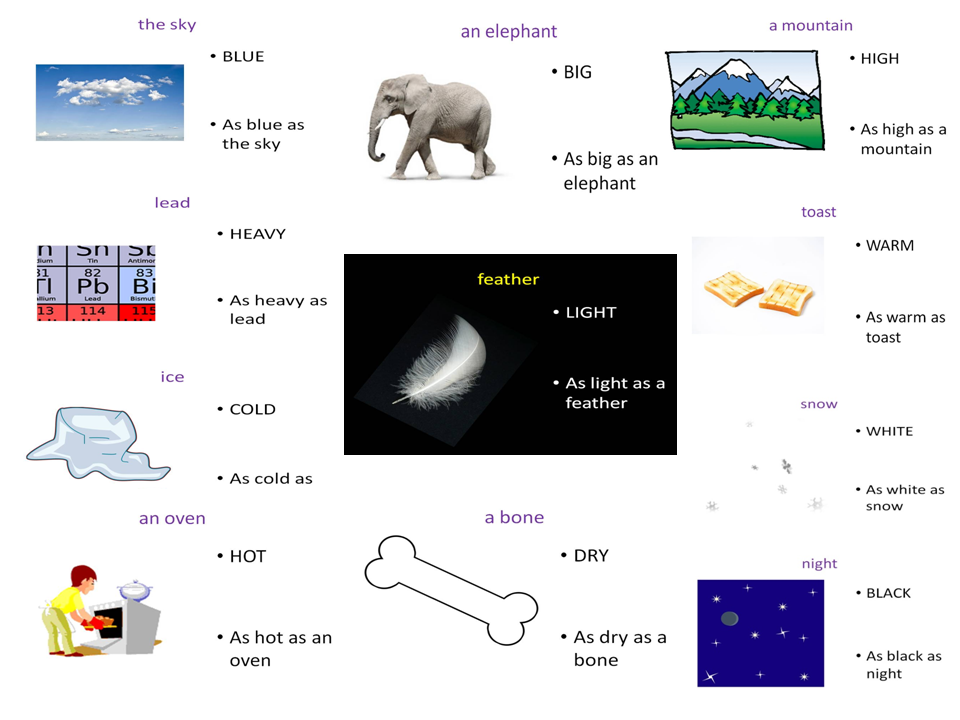
Do you know these similes?
Similes – video
In the following video you can see and hear all the similes. In the first part you are asked to repeat the phrases. In the second you have to produce the phrases on your own.
ADVERT
[showmyads]
Similes – dictation
In this task you will hear the similes used in simple sentences. Listen and write the sentences. If you succeed you can play the game Angry finches. Good luck
Similes – practice
If you know all the similes print out the following mind map and complete it with the similes. You should keep the printout and use it for future reference.
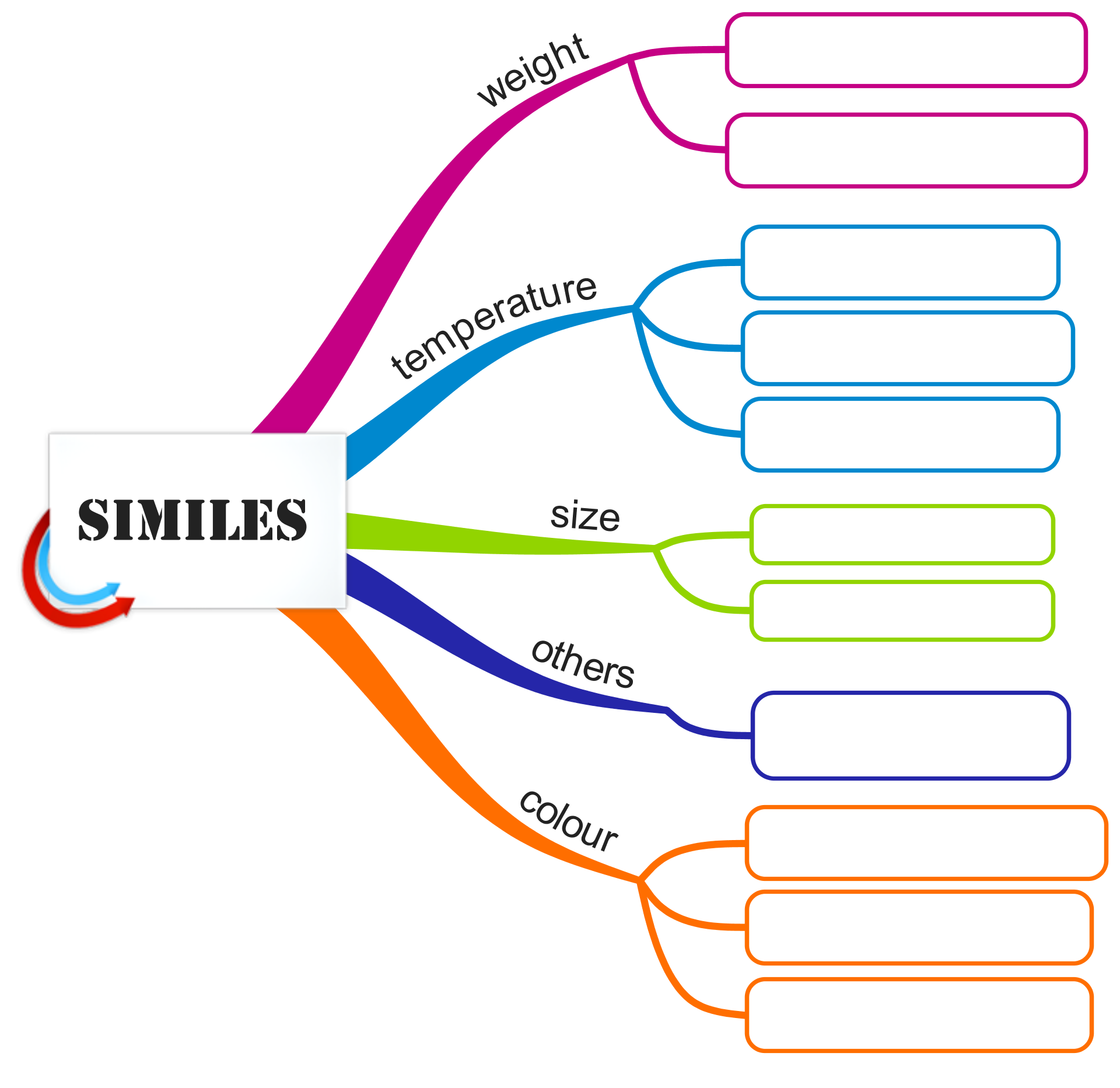
Complete this mind map with the similes you remember
“What does maths have to do with learning English?” you might ask. Many people believe that nothing. In fact many wrongly believe that you can be good either at maths or at English. However, I think that mathematics and English have more in common than it might seem at the first sight. To be good…
In this post, I try to explain what countable and uncountable nouns are. When I speak with native speakers of English they often tell me that the concept of countability in English is absolutely natural. “You simply know which noun is countable and which is not.” However, this natural feeling is nearly impossible to teach….
In this post, I would like to share four speaking activities that worked very well in my classes. There are two games to practise comparatives and superlatives and two activities to practise describing people. The first two activities help your students practise the usage of comparatives and superlatives. The first one is a simple board…
Elementary students are taught that there is very little difference between the words MUST and HAVE TO. Little as it may be, it exists. And in this post I would like to give you several rules which will help you decide which one is better in the given sentence. <!– wp:more –> ADVERT: [showmyads] In…
Yesterday a friend sent me a song he’d written that uses only the past simple and past continuous tenses. He asked me how I liked it, and I had to admit it was great. A few hours later I encountered a short explanation of the same grammar by Australiaplus.com, and I realised that I wanted…
This material is a demonstration of the approach called CLIL. In CLIL You learn the content and thus you learn the language. However, experimenting a bit with the approach I like to do this a bit differently. First, I introduce the vocabulary through the mind map, then I present the text (this time in a…